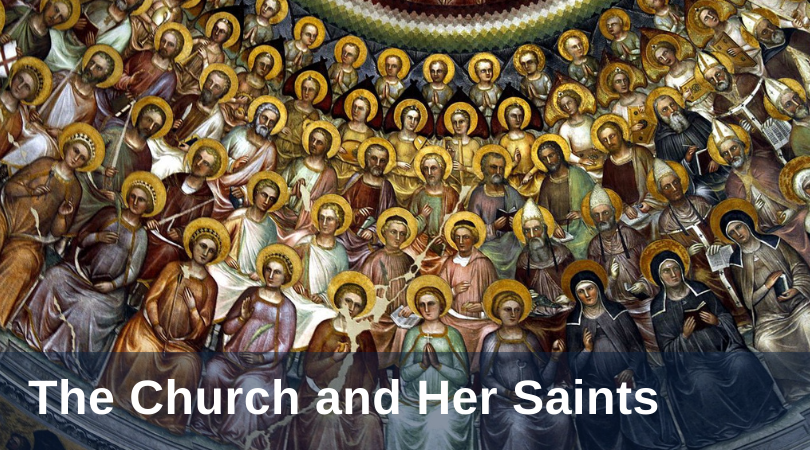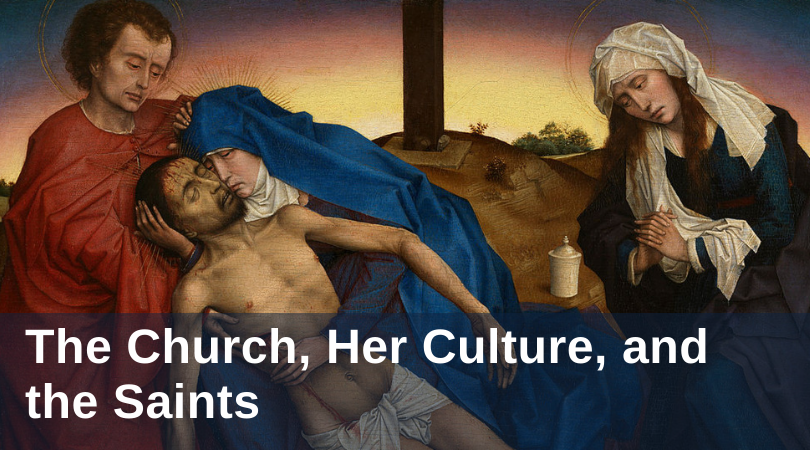
Joseph Cardinal Ratzinger once reported that “the only really effective apologia for Christianity comes down to two arguments, namely the saints the Church has produced and the art which has grown in her womb.” In this month marked by the feast of All Saints, I wish to take up examples of the truth of Ratzinger’s statement, one from the literary arts and one from the visual arts, both related to the saints.
Topics: Culture, Catholic imagination, saints, Sigrid Undset, literature, visual arts
In The Spirit of the Liturgy, Romano Guardini describes the link between culture and the liturgy. Without the liturgy, culture turns in upon itself, becoming the religion of the aesthete. Without culture, liturgy desiccates, unable to lift the human spirit to adore the living God.
Topics: Catholic education, liturgy, formation, Liturgy Week
As a former college track and field sprinter, I have spent countless hours of my life practicing. I have struggled through long workouts to build endurance, faster workouts to build speed, weight-lifting to build strength, and shorter workouts to provide rest before a competition. In each one of these instances, I began practice going through a set of drills. While these drills provided the necessary preparation for the workout, they also functioned to train my muscles to behave in a certain manner. Marching, skipping, high knees—all of these tedious drills were extremely important in creating muscle memory. Every sport has a series of drills or routines that athletes perform which allow an athlete to trust her muscles to act in the way she needs them to without thought.
Training and preparation is necessary not only in sports but in all areas of life, especially the moral life.
Topics: pro-life, human dignity, teaching resources, Office of Life and Human Dignity
History is full of hope. This is what the saints tell us and why their stories should be told and celebrated in every day and age. The holy men and women who have gone before us direct our attention toward the final unfolding of history, when God will be all and in all. However, this is not always obvious, at least it wasn’t to me. As a young school girl, and even as a graduate student, history was a subject for study. I learned about the past, and often that past that didn’t seem to have much to do with me, at least not here and now, nor in the future.
Topics: communion of saints, Revelation, saints, St. Maximilian Kolbe, All Saints Day
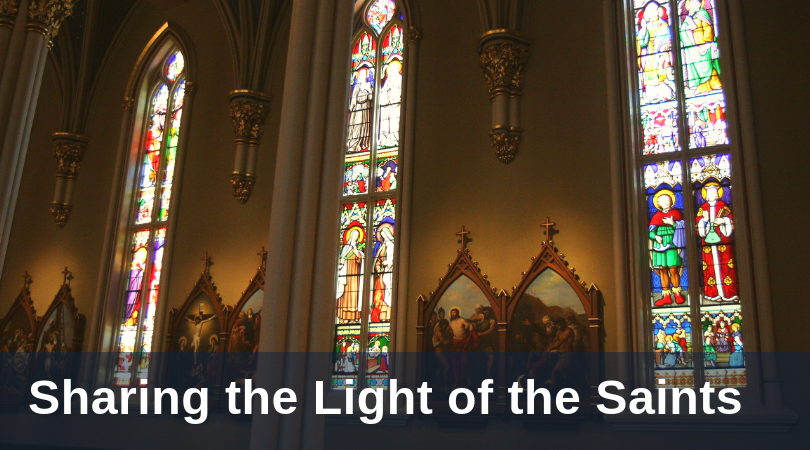
I heard a story once about a young boy who is visiting Europe with his family. In their visits to iconic places throughout Europe, this little boy becomes particularly enamored with the majesty of the cathedrals and churches that soon become familiar stopping places along their route.
One day, the boy’s father comes across his son looking up at the sun’s reflection in some stained glass windows, his face illuminated by the kaleidoscope of colors that shine through the marvelous glass. Struck by the beauty of the sight, the son asks his father, “Who are those people in the windows?” And the father, following the boy’s curious gaze, catches a glimpse of the holy men and women from throughout the Church’s history. Turning to his son, he remarks, “Oh! Those are the Saints!”
Topics: communion of saints, holiness, saints, teaching resources, universal call to holiness